
Many types of property and investments pass outside of probate and allow you to designate who will receive them after your death. It is important that these designations are kept up to date and are consistent with the rest of your estate plan.
When you open up an investment account or retirement plan or buy life insurance, the company encourages you to name beneficiaries who will inherit the property on your death. The choice you made at the time may not have taken your estate plan into consideration. To review your beneficiaries, get a copy of all of your beneficiary designation forms. Check to make sure that your beneficiaries are consistent with the rest of your estate plan or, if they are different, that the difference is intentional. If you made these designations online, print a copy of the page so that you also have a paper record. Once you have collected all of these forms, put them in a folder with your other estate-planning documents so that you and your heirs can quickly and easily find them in the future.
In determining how to make your beneficiary designations, the following are the considerations for each type of account:
- Bank and investment accounts. If you have a revocable trust as part of your estate plan, you can make the trust the owner of all of your bank and investment accounts. This way you avoid the need to name anyone as beneficiary and you still avoid probate. Then, all of the protections provided in the trust–for instance, that children do not receive their inheritance until a certain age or provisions for who receives the funds if a beneficiary predeceases you–will apply to the accounts. If you’re not using a revocable trust, simply name those who will receive your estate under the terms of your will. Or you have the option to name no one. If you do not designate a beneficiary, the account will pass according to the terms of your will and, while you won’t avoid probate, you’ll make sure that the people you want will receive the assets, that your personal representative will be in charge, and that any changes you make in the future–such as disinheriting your wayward nephew– will apply to the accounts.
- Life insurance. Unlike bank and investment accounts, the ownership of many life insurance policies–especially those that come as an employment benefit–cannot be transferred to your revocable trust. And there is really no benefit to doing so in any case (although there might be some tax and long-term care planning reasons to transfer property to irrevocable trusts). Instead, the beneficiary designation is the most important decision. If you have a revocable trust, you may name it as the beneficiary for the reasons mentioned above. Or you can name particular individuals. The beneficiary designation form will permit you to name alternates in the event that the first person or people you name predecease you.
- Retirement plans. First, don’t transfer your retirement plans to your revocable trust. The only way to do so is to liquidate the plan first, which would be a taxable event. Second, don’t name your revocable trust as a beneficiary of your retirement funds without consulting your lawyer. In most instances, if your spouse is not the beneficiary, the retirement plan will have to be liquidated and the taxes paid within 10 years of your death. On the other hand, if you have a relatively small amount of funds in retirement accounts, this might not be a big problem. It is much more important with retirement plans than with life insurance or other investments that you designate a beneficiary, because there are different rules for different beneficiaries. If your spouse inherits your IRA, your spouse can treat the IRA as his or her own. Your spouse can either put the IRA in his or her name or roll it over into a new IRA. The rules for a child or grandchild (or other non-spouse) who inherits an IRA are somewhat different than those for a spouse. The beneficiary must withdraw all of the assets in the inherited account within 10 years. There are no required distributions during those 10 years, but it must all be distributed by the 10th year.
To make sure that your beneficiary designations align with your estate plan and are as beneficial to your intended heirs as possible, talk with an attorney here at Elville and Associates. Initial estate planning consultations as well as document reviews are free, and we look forward to being a resource to your family and you. To make an appointment, contact Legal Administrator Mary Guay Kramer at mary@elvilleassociates.com, or at 443-741-3635.

 By: Olivia R. Holcombe-Volke – Partner and Senior Estate Planning Attorney – Elville and Associates, P.C.
Many clients ask “how will my son/daughter/sister/cousin/friend [i.e., people designated to carry out the estate plan] KNOW what the documents say or how they work?” This question highlights a very important point, which is that an estate plan is only as effective as there is knowledge of its existence and function. If none of the people designated to carry out certain roles are aware that they have been so designated, nor aware of the location of the documents, nor the logistics of acting under the documents and what they are and are not allowed and expected to do, nor the client’s intentions and preferences and goals and concerns, nor any of the professionals involved with the client’s health, the financial, and legal world and wellbeing – then the estate planning documents that were so carefully thought through, the money that was so preciously spent to create them, and the protections that were intended to result from doing so, may all be for naught. An effective estate plan is one that does not exist in a vacuum.
What is the solution? The answer to this question is to have what is often referred to as “the family meeting,” though this is a bit of a misnomer, as its purpose is primarily to bring the named health, financial, and estate agents (those persons named to carry out certain roles) into the loop. Often these named agents are family members, but the point of the so called “family meeting” is to include the people who have been designated to act in certain capacities, whatever their relationship to the client may be, in the estate planning process, so that they have the opportunity to be made aware of their designation to act in certain capacities, at certain times, and what that all means.
The family meeting may also be useful for the purpose of introducing the beneficiaries of the estate plan to the plan and the intentions behind it. This may or may not be appropriate in all situations – not every client wishes their intended beneficiaries to know that they have been named as beneficiaries in the estate plan, as the client may wish to change that plan in the future, and does not wish to cause upset or conflict as a result. And, this in no way means sharing any of the specifics of the size or amount of assets involved, unless that is information that the client desires to share.
The attorneys of Elville and Associates offer and encourage clients to include a family meeting as part of the estate planning process. The additional benefit of doing so with the estate planning attorney’s participation is that it allows the named agents, beneficiaries, and family members to put a face to a name, and to know that there is a professional involved who can assist with the activation and administration of any of the necessary estate planning documents, if and when the time for such activation and administration arrives.
The first step in any successful estate plan is to create the plan. The second and equally vital step is to implement the plan, which includes notifying the involved parties of the existence of the plan, and their respective roles in it.
More Webinars from Elville and Associates
The education of clients and their families through counseling and superior legal-technical knowledge is the mission of Elville and Associates. We hold multiple educational events every month. Click to view our calendar of educational webinars and events or visit the Elville and Associates YouTube channel to view recordings of our past webinars.
More Webinars from Elville and Associates
The education of clients and their families through counseling and superior legal-technical knowledge is the mission of Elville and Associates. We hold multiple educational events every month. Click to view our calendar of educational webinars and events or visit the Elville and Associates YouTube channel to view recordings of our past webinars.

 By: Stephen R. Elville — President and Principal Attorney of Elville and Associates, P.C.
A Client Care Program – what is it? Elville and Associates is one of the only law firms in Maryland to offer a Client Care Program (CCP) to its clients and one of only a handful of firms in the country to have its CCP accredited by the Client Care Academy in Boston. Built on the platform of its caring for clients model, the CCP is designed to provide continuing client education to clients, their family members, chosen fiduciaries, and professional advisors, and to encourage clients to update and maintain their estate planning, special needs planning, and elder law to ensure that those plans will work as intended throughout lifetime and at maturity. CCP members enjoy at least four educational and social events per year; annual personal update meetings, discounts on legal services and other product-related services, use of the Elville Studio for production of personal legacy videos and family photography; two hours of discounted attorney time per year; a MIDEO (My Informed Decisions on VidEO) Card) and more. Your participation in the CCP can ensure the ultimate success of your planning and remove any doubts or guesswork from the equation. For more information about Elville and Associates’ Client Care Program, please contact CCP Coordinator Mary Guay Kramer at mary@elvilleassociates.com or at 443-741-3635.
Are you taking the time to think about ensuring the ultimate success of your estate planning? Stephen R. Elville is the principal and lead attorney of Elville and Associates –Planning for Life, Planning for Legacies
#elvilleeducation

The COVID-19 pandemic has sent unemployment to its highest levels since the Great Depression, and older workers have been particularly hard hit, with one in five over age 55 now out of work, according to one estimate.
Many people continue to work beyond retirement age, either by choice or out of necessity, at the same time that they receive Social Security benefits. Other older workers are now being forced to take their benefits early after losing their jobs (although doing so permanently reduces the amount beneficiaries can receive).
If you are already receiving Social Security, are you also eligible for full unemployment benefits? Until recently, the answer was not necessarily. Many states reduced unemployment benefits of those receiving Social Security retirement benefits by up to 50 percent, something called the “Social Security offset.” But after AARP and the National Unemployment Law Project pushed to have these laws overturned, this is no longer the case. In 2015, Illinois became the last state to repeal the Social Security offset.
“These two benefits are not duplicate payments,” the Law Project said at the time. “Older workers who must work or choose to work should not have their unemployment benefits cut or eliminated simply because they have reached the age to qualify for Social Security.”
Unemployment insurance is administered by the states. For information on filing for unemployment insurance and to find your state’s office, click here.
Similar to Social Security, certain other “unearned” income you may receive, like annuities and investment income, do not count against receiving unemployment insurance. Only earned income affects unemployment benefits.
For a calculator from the job listing site Zippia that estimates your weekly benefit depending on your state, click here.
Boilerplate That May Bring You to a Boil

 By: Charles A. “Chuck” Borek, J.D., MBA, CPA – Guest Contributor – Charles A. Borek, J.D., and The Borek Group, LLC – Special Counsel to Elville and Associates, P.C.
Those miscellaneous provisions at the end of the contract that nobody pays attention to – you know, the severability, survival, and further assurances clauses – have suddenly become very important. The truth is they have always been important. Like footnotes, however, many contracting parties (and even sometimes contract drafters) treat them as if they are inconsequential ancillary add-ons that have more to do with tradition than with transactions.
We even have a dismissive name for them – “boilerplate,” a term once used to describe the metal used to make steam boilers that morphed into a term to describe newspaper writing that could be used over and over again without change. Webster’s now defines it as “formulaic or hackneyed language.” But boilerplate, as some are now discovering, can be critically important.
Due to the COVID-19 pandemic, many contracting parties are now dusting off those boilerplate provisions and are paying particular attention to the clause that is commonly referred to as “force majeure.” That is a French term meaning “a superior or irresistible force.” In contract law, it generally indicates that a party’s performance is excused when that performance is made impracticable due to the occurrence of an event that everyone assumed would not occur. Not expecting something to occur, however, is different form assuming that it would not. The question many are now asking is if the lack of a pandemic is an implicit condition contemplated by a contract. The reality is that most contracts are formed without anyone ever considering the effects of a pandemic on the agreement. So, does COVID-19 save you from a claim of breach when you are unable to perform your contractual obligations? Can you get damages when the other party fails to perform because of COVID-19?
Maybe. Maybe not. An unforeseen shutdown of major sources of supply which either causes a marked increase in cost or prevents performance altogether may cause the force majeure provision to be invoked. Performance may also be impracticable because it will involve a risk of injury or sickness that is disproportionate to the ends to be attained by performance.
On the other hand, “impracticability” means more than “impracticality.” A mere change in the degree of difficulty or expense, unless well beyond the normal range, may not amount to impracticability, since it is this sort of risk that a fixed-price contract is intended to cover. Furthermore, a party is expected to use reasonable e‑orts to surmount obstacles to performance, and a performance is impracticable only if it is so in spite of such efforts.
In short, the law requires more than inconvenience or even substantial hardship. The legal question is if the agreement was founded on an assumption that a pandemic would not occur. Did you consider the possibility of a pandemic the last time you entered into a contract? Probably not.
So where does that leave us? In unchartered waters. At least with respect to contracts that have already been entered into. The lesson here is that pandemics are now issues that we should consider when making a contract, and force majeure provisions should be tailored to indicate exactly what effect any such situation will have on performance. Consideration should be given to whether performance is excused or just delayed, for instance.
Unfortunately, it often takes a previously unimaginable tragedy like COVID-19 to draw our attention to things that have been important all along. Rare occurrences lull us into complacency. Complacency sometimes results in economically devastating consequences. While social distance and disinfectants may be our main health concerns right now, the health of our business and economic lives shouldn’t be ignored. It’s time to start paying attention to the entirety of contracts, including those provisions we hope we never have to use.
Chuck Borek is a business and tax attorney with almost 30 years of experience representing individuals, small businesses, and nonprots. Chuck earned his joint JD/MBA summa cum laude from the University of Baltimore, where he was the Editor-in-Chief of the Law Review and the recipient of the 1993 Law Faculty Award. He has taught law students as a visiting professor and adjunct professor of law at American University and the University of Baltimore and has lectured at Dickinson law school of Penn State University. Chuck has written for Thomson-Reuters, Bloomberg BNA, and the AICPA. His book on contract drafting is used by lawyers throughout Manyland and has been cited by the Maryland courts.

By: Stephen R. Elville – President and Principal Attorney — Elville and Associates, P.C.
You are searching for a client care program (whether you know it or not). Yes, you are. Whether you are consciously aware of this or not is the purpose of this article. You do want your estate plan – your Last Will and Testament; or your will substitute, your Revocable Living Trust, to work as you intend it to. You want the terms and provisions of those documents – your documents – to accurately reflect your current thinking and address the current circumstances of your life and the lives of your family members; you want your estate plan to be updated in accordance with the latest changes in the laws, including the tax laws; and you want your financial assets – non-retirement assets such as cash in checking, savings, money market accounts, and certificates of deposit, mutual funds, stocks, bonds, real estate, tangible personal property, intangible personal property, business interests such as ownership in corporations or limited liability companies; beneficiary designated assets such as life insurance, annuities, payable on death accounts, transferable on death accounts; and retirement-type assets (also beneficiary designated) IRAs and qualified plans such as 401(k)s, Thrift Savings Plans, 403(b)s, and 457 plans – to either be intentionally controlled by the terms and provisions of your will or trust; or to intentionally not be controlled by those terms and provisions and instead flow in certain other directions – all intentionally. This intentionalism I will call it is the essence of what real estate planning is all about. Everything else concerning the subject of estate planning fades into insignificance by comparison. If you are not extremely intentional in your estate planning (and this includes elder-related planning, special needs planning, and business planning), your planning will possibly collapse. Since we know that no rational person wants his or her estate plan to risk failure, let’s first remove any doubt that an estate plan can easily fail.
Estate plans can collapse or fail for many reasons, but most of us do not consider just how easy it is for this to happen. Before we review several examples, let’s define what estate plan collapse is by first considering what estate planning is. This is challenging because each person’s estate planning goals are different and therefore each person’s definition of estate planning can be different. But for our general purposes here, one general definition of estate planning might be this: estate planning is the process of disposing of my assets, to the persons or organizations of my choice, at the lowest possible cost. Notice with special emphasis the word process. Others might define estate planning as one or more of the following: ensuring that assets never go to my spouse’s potential new spouse; or protecting against the new spousal elective share law; or making sure estate, gift, inheritance, and income taxes are minimized or eliminated; or protecting retirement plan asset shares and minimizing the impact of the new SECURE Act; protecting the shares of beneficiaries from the claims of creditors; planning successfully for a child or loved one with special needs; planning for a spouse with dementia; ensuring the care, safety, and well-being of parents or grandchildren; and many more. With these ideas in mind and with the knowledge that each individual will have their own definition of what estate planning is and what it means to them, let us define what estate planning carelessness is, as including but not limited to the following examples: lack of a partnership-type relationship with your estate planning attorney; estate planning equals a one-time transaction; lack of a defined process; focus of estate planning is on “documents”; no follow-up or on-going maintenance of the estate plan; no financial advisory or tax professional team; no collaboration of the advisory team; no consideration of changes in the laws; no client legal education; no consideration of unforeseen contingencies; incorrect or non-existent beneficiary designations; no proper asset alignment; lack of understanding of effects of beneficiary designating non-retirement assets; poor selection of fiduciaries; no education of fiduciaries; poor organization (and many more).
Having made outlandish assumptions here about what you intuitively want, and having gone to great lengths to show that estate planning must be carefully and consistently orchestrated in order to ultimately be successful, as is further illustrated in my upcoming book, let us now get to the main thrust of this article – how to be intentional in your estate planning. More specifically, how to practice intentionalism in your estate planning.
We begin by recognizing something very fundamental: being intentional isn’t easy – and we assume that by knowing how to do a thing, we can move forward in a scientific way towards its accomplishment – an estate plan that works as you intend it to. Here is the definition of “intentional”, as defined in Websters Online Dictionary, April 2020: done by intention or design; having external reference. Synonyms include conscious, deliberate, intended, knowing, and purposeful. Antonyms include unintentional, and nondeliberate. Applying this literally then, an intentional estate plan is one that is designed and done with conscious and deliberate intention, with reference to an external process. With this said, can you imagine having an unintentional estate plan? Yet this is what most people unknowingly do, and what they unknowingly have. Understanding the full import of this last sentence is key to overcoming the enormous obstacles to successful estate planning.
In estate planning, being intentional means many things then, among them these: knowing what you want and what your goals are; selecting the correct estate planning attorney; engaging in a partnership-type relationship with your estate planning attorney; expecting and participating in an estate planning process that includes client education as part of that process; aligning your assets with your estate plan in coordination with your estate planning attorney and financial advisory team; committing to maintaining and updating your estate planning on a systematic basis over the years; and participating in a client care program to encourage and accomplish continuing client legal education and updating, including ongoing adjustments to documents and the alignment of assets.
Because the first several intentionality requirements listed here are beyond the scope of this article, we will focus only on the last two – one of which is completely within your control, and the other being almost completely within your control. The first, committing to maintaining and updating your estate planning on a systematic basis over the years to come, is completely within your control. Because of your desire to develop a fully functional estate plan, your recognition of the complexities and considerations involved over a lifetime, and your instinctive understanding of the kind of methodical approach that will be required to overcome the everyday noise and life inertia that keeps so many people from success, you mentally commit that incapacity and death planning (the primary elements of estate planning) will become a routine part of your life, and as such it will be scheduled on your calendar. You can do this on your own, and you may have already made the necessary commitment right now during your reading of these words. The second, participating in a client care program to encourage and accomplish continuing client legal education and updating, including ongoing adjustments to the alignment of assets, is almost completely within your control, but ultimately is not. Here’s why. Try as they may (and usually “trying” is the exception), hundreds of estate planning law firms across the United States fail to implement a client care program, otherwise known as a client maintenance and updating program. By failing to do this, these law firms ensure the potential collapse of at least some of their clients’ estate plans at best, and of a majority of their clients’ estate plans at worst. This is quite a statement, and quite an indictment I know. But consider this – how many people in the United States actually have an estate plan? We know the answer – only a minority of the population. Going one step further, how many people meet with an attorney to sign a will or revocable trust, then never hear from that attorney again, or in all fairness to the attorney or law firm, never contact the attorney again? We don’t know the exact number(s) of course, but we intuitively know the answer. Further, consider this – how many people today sign wills or trusts without an attorney, then never follow up or revisit their planning, and never consider the alignment of their assets? We know the sad answer to this too.
This leads us to an obvious and final dilemma. If you are a conscientious person who is willing to commit to estate planning that works as you intend it to, then you must find an estate planning attorney or estate planning law firm who understands your commitment and agrees to commit to you by providing you with the opportunity to achieve success by participating in a comprehensive client care program, one that ensures victory in your estate planning through continuous, repetitious maintenance and updating of documents and the alignment of assets, client continuing education, fiduciary education, inclusive family participation, educational and social events, collaboration with financial and tax advisors, and exclusive ancillary services – again, all for the purpose of cultivating and encouraging real success in estate planning. By having read this article, or perhaps having been led to read it, we know you have the spark of commitment – you have what it takes. You know you are the hero of the story – your own story, and you are now setting out on your estate planning journey to find an estate planning attorney/estate planning law firm worthy of you. You intuitively know you must make this journey. And now you know what you must do and what you must look for. The search begins.
Stephen R. Elville is the founder, principal, and lead attorney of Elville and Associates, P.C., an Estate Planning, Elder Law, and Special Needs Planning law firm in central Maryland. The mission of Elville and Associates is to provide practical solutions for clients’ needs through counseling, education, and superior legal-technical knowledge. This is accomplished through a focus on client legal education, collaboration with professional advisors, and through compassion and a caring for clients model. Elville and Associates is one of only 60 law firms in the U.S. that is accredited by the Client Care Academy in Boston, Massachusetts. Through Elville and Associates’ Client Care Program, clients are provided with the opportunity to participate in a partnership-type arrangement designed to facilitate comfort and assurance that estate, elder law, and special needs plans will stay maintained and updated over the passage of time and ultimately work as intended at the time of maturity. To learn more about Intentionalism in estate planning and Elville and Associates’ Client Care Program, please contact Stephen R. Elville at 443-393-7696, or via email at steve@elvilleassociates.com; or Mary Guay Kramer at 443-741-3635, or via email at mary@elvilleassociates.com.
Elville and Associates Announces New Special Counsel Attorney — Charles A. (“Chuck”) Borek, JD, MBA, CPA
Message from Stephen R. Elville, President and Principal Attorney
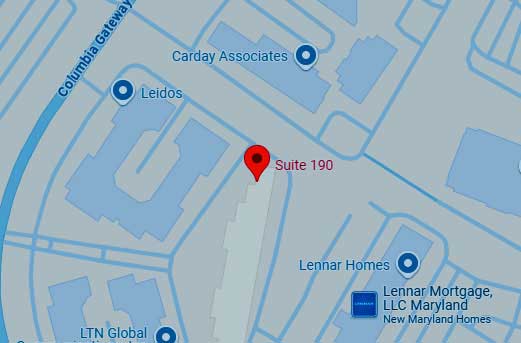
I am proud to announce that Charles A. (“Chuck”) Borek, JD, MBA, CPA is now Special Counsel to Elville and Associates, and that his offices are now located at Elville and Associates’ main offices at 7100 Columbia Gateway Drive, Suite 190, Columbia, Maryland 21046. As an expert in the areas of business and taxation, a Certified Public Accountant, and a long-time law school professor, academician, writer, and presenter, Chuck brings his vast experience and knowledge to Elville.
and Associates as we expand our business planning, business transactions, business succession, taxation, and tax controversy practice areas. I’m exceedingly pleased that our clients will now have access to and the benefit of Chuck’s professional skills and capabilities as Elville and Associates continues its mission and vision of educating and caring for clients in estate planning, elder law planning, special needs planning, and now business planning, through leading-edge legal-technical knowledge. As a further introduction to Chuck Borek, I am including his biography below.
”Chuck Borek is a business and tax attorney with almost 30 years of experience representing individuals, small businesses, and nonprofits. Chuck earned his joint JD/MBA summa cum laude from the University of Baltimore, where he was the Editor-in-Chief of the Law Review and the recipient of the 1993 Law Faculty Award. He has taught law students as a visiting professor and adjunct professor of law at American University and the University of Baltimore and has lectured at Dickinson law school of Penn State University. Chuck has written for Thomson-Reuters, Bloomberg BNA, and the AICPA. His book on contract drafting is used by lawyers throughout Manyland and has been cited by the Maryland courts. Additionally, Chuck presents seminars to CPAs and lawyers around the country though his company The Borek Group, LLC, including presentations to “Big 4” accounting firms and Fortune 500 companies. He lives with his wife, the youngest of his four children, and two dogs in Howard County and is currently pursuing graduate work in theology and literature at Wesley Theological Seminary in Washington, DC. “
Chuck can be reached at chuck@elvilleassociates.com or via phone at 443-393-7696.
A New Initiative Through the Elville Center for the Creative Arts – Access to Music (ATM)
By: Stephen R. Elville, J.D., LL.M. – President and Founder – Elville Center for the Creative Arts, Inc.
It’s casual virtual Friday at Elville and Associates and here’s what’s on my mind. This morning I noticed how green and beautiful my yard is after all the April showers. And oh, during this sad and challenging time I find myself once again absorbed in music, Johann Sebastian Bach‘s music for piano that is. Yes, once again I am fascinated and awestruck by Bach. How could this “ordinary” church organist have been so very extraordinary? While I am not a music historian or expert like Jonathan Palevsky and our other friends at WBJC, to me this is one of the great mysteries that leaves me speechless, especially after listening to a master like Murray Perahia play Bach, or after sitting down at my piano to practice one of the (easier) French Suites. What does my simple morning diatribe here mean? Maybe this: even while we persevere, adapt, withstand long suffering difficulties, endure tragedy, laugh, cry, and overcome during the COVID-19 disaster, let us remember that greatness, beauty, and wonder still surround us and can be explored and appreciated by us – even now. Along these lines, the Elville Center for the Creative Arts is introducing a new program for children and adults during the COVID-19 disaster and beyond. It’s called Access To Music (ATM) – a virtual online program where Elville Center music instructors will provide music theory and application lessons to people of all ages at no cost. Stand by for more information in the coming days and weeks about this important new program.
The purpose of the Elville Center for the Creative Arts is to improve the quality of life of children of all ages by providing them the opportunity to learn music theory and application, experience cultural events related to the musical and creative arts, and to use music and the promotion of music-related activities to transcend social and economic divisions.
We are working with local and regional businesses and private donors to partner with schools’ music programs to provide musical instruments, rentals, music lessons and participation in music-related activities for children of all ages. We’re actively seeking monetary pledges and donations of used instruments of any kind, which will be refurbished (Donations may be tax-deductible. Please consult with your tax advisor).
For more information or to get involved, please contact President and Founder Stephen Elville at steve@elvilleassociates.com or Executive Director Jeffrey Stauffer at jeff@elvilleassociates.com, or call us at 443-393-7696. Please also visit www.elvillecenter.org to learn more about the Elville Center and how you can donate and support our initiatives!
Connect with us


- March 2026
- February 2026
- January 2026
- December 2025
- November 2025
- October 2025
- September 2025
- August 2025
- July 2025
- June 2025
- May 2025
- April 2025
- March 2025
- February 2025
- January 2025
- September 2024
- August 2024
- July 2024
- May 2024
- April 2024
- March 2024
- February 2024
- January 2024
- December 2023
- November 2023
- October 2023
- September 2023
- August 2023
- July 2023
- June 2023
- May 2023
- March 2023
- February 2023
- January 2023
- December 2022
- November 2022
- October 2022
- September 2022
- August 2022
- July 2022
- June 2022
- May 2022
- April 2022
- March 2022
- February 2022
- January 2022
- December 2021
- November 2021
- October 2021
- September 2021
- August 2021
- July 2021
- June 2021
- May 2021
- April 2021
- March 2021
- February 2021
- January 2021
- December 2020
- November 2020
- October 2020
- September 2020
- August 2020
- July 2020
- June 2020
- May 2020
- April 2020
- March 2020
- February 2020
- January 2020
- December 2019
- November 2019
- October 2019
- September 2019
- August 2019
- July 2019
- June 2019
- May 2019
- April 2019
- February 2019
- November 2018
- May 2018
- April 2018
- January 2018
- June 2017
- March 2017
- December 2016
- November 2016
- September 2016
- August 2016
- July 2016
- June 2016
- May 2016
- April 2016
- March 2016
- February 2016
- January 2016
- December 2015
- November 2015
- October 2015
- September 2015
- August 2015
- June 2015
- May 2015